


Discover the true story of pickleball: who created it, how it’s played, why it’s growing so fast, and what makes it unique in the United States, Spain, Europe, and the rest of the world. Learn the rules, where to play, and how to choose the best equipment.
What is pickleball? Origins and technical definition
Pickleball is a modern, accessible, and surprisingly addictive sport that combines the best of tennis, badminton, and table tennis. It is played with solid paddles and a perforated plastic ball on a court smaller than a tennis court, resulting in fast, fun matches suitable for all ages and fitness levels.
Born in 1965 on Bainbridge Island, in the state of Washington (USA), pickleball has gone from being an improvised backyard game to becoming a global phenomenon that brings together millions of players worldwide. If you want to learn its technical foundations or find out how to get started, this complete guide has everything you need.
The birth of pickleball: an improvised game with worldwide impact
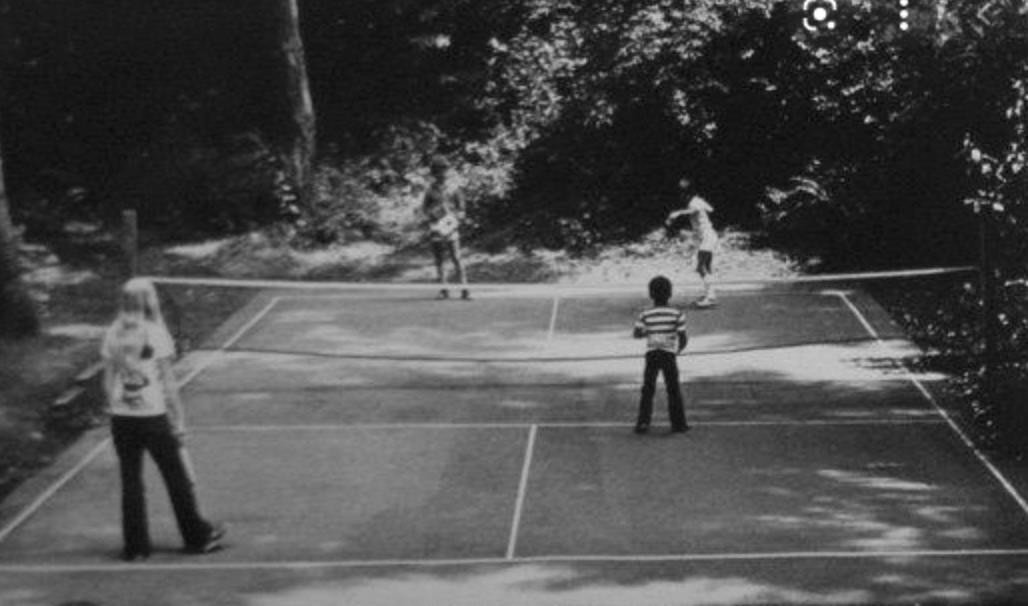
The story of pickleball is as simple as it is endearing. It was not born in an elite gym or created by a sports committee, but in the most everyday and familiar place you can imagine: the backyard of a house on Bainbridge Island, a small enclave near Seattle.
The founders and the creation of the game
In the summer of 1965, three friends and neighbors — Joel Pritchard, Bill Bell, and Barney McCallum — were looking for a way to entertain their children during a long school-free weekend.
David McCallum, Barney’s son, recalls:
“There was a badminton court, some wooden paddles, a plastic ball… and a lot of boredom.”
With what they had on hand, they improvised a hybrid game that, without knowing it at the time, would end up becoming a global sporting phenomenon.
The original elements of the first match
Cosom Fun Ball: a lightweight, perforated plastic ball, perfect for avoiding hard hits and potential injuries.
Wooden paddles: initially simple makeshift boards, but Barney McCallum began making homemade versions in his basement, using plywood and his band saw.
Badminton court: the original playing space, though the dimensions and net height were later adapted to improve game dynamics.
Barney McCallum would describe those first games with a smile:
“We laughed, debated the rules, played again. It was just for fun.”
The origin of the name: Pickles the dog or the “pickle boat”?
One of the most charming stories about the sport’s name points to Pickles, the family dog, who supposedly chased the ball during games and ran off with it. However, the founders themselves clarified that Pickles was adopted after the game already existed, making this a fun coincidence.
The most accepted explanation is another: the term “pickleball” comes from the nautical expression “pickle boat,” used in rowing to describe a boat made up of oarsmen from different teams. A perfect image for the hybrid, improvised, and community nature of the sport’s birth.
Expansion and professionalization of pickleball
What began as a family activity in a backyard soon spread to parks, community centers, schools, and eventually professional courts around the world. Pickleball grew naturally, driven by word of mouth, the enthusiasm of its players, and the ease with which anyone could join in.
Adaptation and formalization of the rules
As the game gained popularity, the need arose to establish clear, uniform rules.
Key changes included:
- The net was set at 91 cm (36 inches) high, exactly at the waist level of Joel Pritchard, one of the creators.
- The “non-volley zone,” also known as the “kitchen,” was defined to prevent taller or stronger players from dominating with close-range smashes.
- Paddles evolved from homemade wooden boards to more advanced models made from materials that improved control, precision, and overall playing experience.
Joel Pritchard, who would later become a congressman, became one of the sport’s biggest promoters. He taught it whenever he could at public events, helping to expand its reach organically.
Pickleball in schools and communities
A key step in the sport’s expansion was its introduction into schools. Doug Smith, a physical education teacher, saw in the game an ideal tool to motivate his students: it was easy to learn, inexpensive, and encouraged participation.
He organized pilot programs in his classes, setting up temporary courts and using donated equipment. His initiative worked, and many schools and universities began adopting pickleball as part of their sports programs.
The game’s social, cooperative, and accessible nature made it an excellent option for both young people and older adults.
Birth of Pickle-ball Inc.
With growing demand, especially for complete sets (net, balls, and paddles), Barney McCallum decided to take things further. Using his experience as a businessman — he owned an envelope factory — he began manufacturing and selling pickleball equipment from his workshop. Thus, Pickle-ball Inc. was born, a family business that grew organically: no big investments, no venture capital, just basic tools, a lot of determination, and an unwavering passion for the sport.
The global boom of pickleball: numbers and trends
Pickleball’s growth in recent years has been nothing short of spectacular. What began as a backyard game has become a worldwide phenomenon, with millions of players, professional tournaments, specialized facilities, and a booming industry.
United States statistics (2024)
In its country of origin, pickleball continues to break records:
- Over 19.8 million active players — a 45.8% increase compared to the previous year.
- An astonishing 311% growth in just three years, according to Sports & Fitness Industry Association (SFIA) data.
- Most players (70%) are between 18 and 44 years old, with an average age of 35.
- Female participation continues to grow, now making up nearly 40% of the total.
- The country has more than 68,000 courts, with 18,000 added in 2024 alone.
These figures reflect not just the sport’s popularity but also its consolidation as a serious, high-potential discipline.
Growth in Spain and Europe
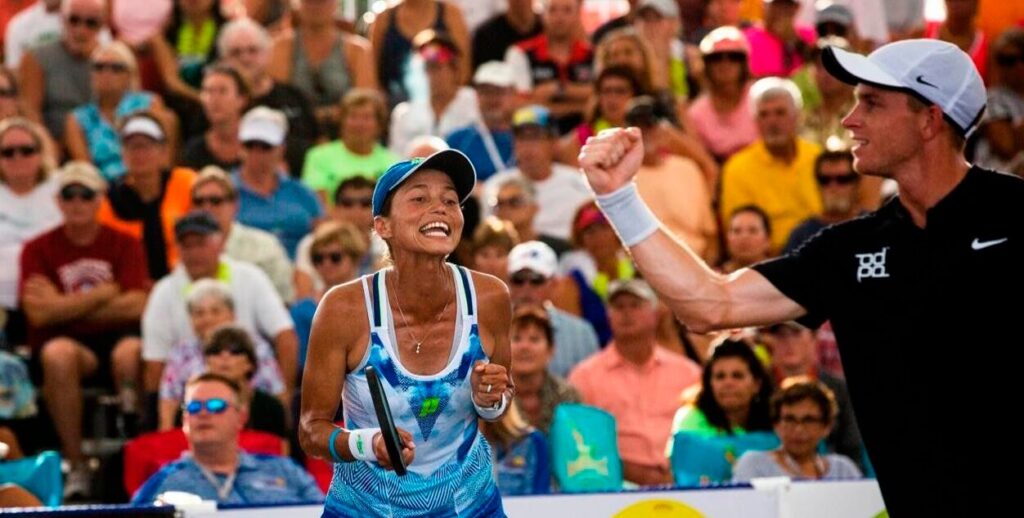
In Spain, there are already an estimated 50,000 active players, with annual growth exceeding 60% since 2020. Cities like Madrid, Barcelona, Valencia, and Seville are seeing new facilities and specialized clubs opening.
- In Spain, there are already an estimated 50,000 active players, with annual growth exceeding 60% since 2020.
- Cities like Madrid, Barcelona, Valencia, and Seville are seeing new facilities and specialized clubs opening.
- Each year the number of courses, tournaments and related activities grows.
Across Europe, countries like France, Germany, Portugal, and the Nordic nations are also experiencing a strong push:
- Over 300 active clubs and 4,000 registered courts in the EU.
- The European Pickleball Federation (EPF) is actively working to promote the sport continent-wide, hosting championships, standardizing rules, and supporting new player communities.
A key factor in this growth is its incorporation into schools and universities, particularly in Spain and France, strengthening its foundation for the future.
International expansion (other countries)
Beyond the U.S. and Europe, pickleball is gaining ground in other corners of the world:
- Canada: 57% growth in player numbers since 2022, reaching 1.54 million active players in 2024.
- India: over 50,000 players and around 500 courts, with steady monthly growth.
- Latin America & Asia: emerging markets where pickleball is gaining traction and potential.
Economic market
This global boom is also reflected on the economic front:
- Valued at USD 1.61 billion in 2024.
- Projected to reach USD 3.1 billion by 2032 if current trends continue.
- Equipment (paddles, balls, clothing, accessories) is booming, with specialized brands like Bürk developing exclusive products for demanding players.
Why pickleball is perfect for everyone: accessibility and community
One of pickleball’s great secrets to success is its accessibility. Anyone can start playing almost immediately, without prior training, expensive equipment, or exceptional fitness.
Reasons it hooks so many players:
- Easy to learn: in less than 30 minutes you can be playing an enjoyable match, even if you’ve never played a racket sport before.
- Adaptability: suitable for all ages and levels, from kids to seniors, adjusting pace and intensity as needed.
- Socialization: beyond the game, pickleball builds community. Short matches allow rotation and make it easy to meet people. Played in pairs, it fosters teamwork and has a much more relaxed atmosphere than other competitive sports.
The future of pickleball: professionalization and social growth
Although pickleball began as a simple pastime, it is now undergoing a transformation positioning it as a professional sport with huge social impact.
Clear signs of its evolution:
- International tournaments with million-dollar prizes, attracting professional athletes and raising the level of play.
- Exclusive leagues and clubs promoting talent and consolidating pickleball as a formal discipline.
- Presence in schools and senior centers thanks to its inclusive nature, making it ideal for both children and older adults.
With continued court expansion, equipment standardization, and community growth worldwide, this sport is not just a trend — it’s building a legacy.
Pickleball is here to stay, and the best is yet to come.
- Small space: it can be practiced on small courts or in adapted spaces – such as a tennis court with partitions – making it viable in schools, parks, gymnasiums and even temporary facilities.
As Hall of Fame member Jenn Lucore puts it:
“The best thing about pickleball is that it doesn’t matter who you are. You can play with anyone and have fun.”
Y es precisamente esa combinación de sencillez, inclusión y diversión lo que lo convierte en mucho más que un deporte: es un punto de encuentro.
Conclusion: join the global pickleball community with Bürk
Pickleball is the perfect combination of fun, sport, and community — born from creativity and friendship, and now a global phenomenon. Its accessibility and inclusive spirit make it unique in the sports world.
At Bürk, we are proud to be part of the pickleball revolution, striving to offer the best pickleball paddles and highest-quality apparel. Our equipment is designed to meet the needs of demanding players who seek quality, comfort, and style to enjoy the game and compete at the highest level anywhere in the world.
Want to start playing or improve your skills? Visit our online store, learn the official rules, and keep learning with our guides and tips on the blog.



 No products in the cart.