

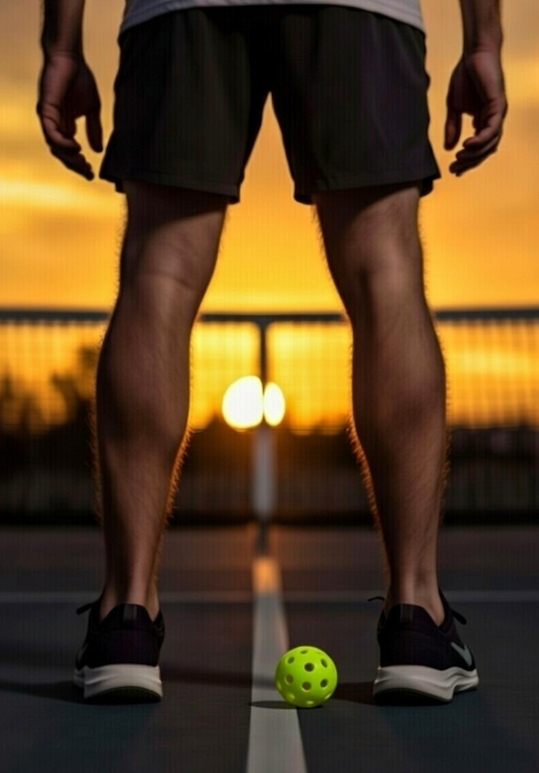
 Pickleball is much more than a social game or a trendy pastime. Behind every quick exchange and every move on the court, the sport puts a complex muscular system to work, especially in the legs. Whether you play recreationally or competitively, your legs are constantly working to forward, stabilize and react in milliseconds. In addition, the player must constantly anticipate his or her position in order to hit the ball well with the pickelball paddle.
In this article we tell you how pickleball positively impacts your leg muscles, and why it’s a great way to strengthen your lower body without stepping foot in a gym.
- Quadriceps and gluteal work in each movement
During a pickleball game, you spend much of your time in a semi-flexed position, also known as an athletic or anticipatory stance. This position constantly activates the quadriceps (front of the thigh) and glutes, which work to support the body’s weight, allow for quick movements and maintain balance.
Each side step, each start towards the net and each change of direction activates these muscle groups dynamically, promoting muscular endurance and toning.
- Calf muscles and soleus: the hidden stabilizers
Although less obvious, the lower leg muscles, such as the calves and soleus, play a key role. They are active in almost every movement, especially when propelling yourself to reach for a ball or maintaining balance during a spin or split-step (preparation step) that allows for a good hit with the pickelball paddle.
The constant use of these muscles improves explosive strength and reaction capacity, which is essential to improve performance in the game.
- Hamstrings: acceleration and braking
The hamstrings, located at the back of the thigh, are activated during acceleration phases and especially during braking or deceleration (for example, when stopping after running towards a ball). These muscles work together with the glutes to generate power in short, intense movements.
Over time, this type of movement helps to strengthen and stabilize the back of the leg, reducing the risk of injury due to muscle imbalance.
- Functional and symmetrical work
Unlike many strength training routines that isolate muscle groups, pickleball engages the legs in a functional way, i.e., using natural and complex movement patterns: running, braking, changing direction, jumping, bending. This improves intermuscular coordination and balance between both legs, which is crucial for preventing injuries and improving overall performance.
- Improved balance and stability
The constant need to move, turn and balance on one or both legs activates not only the superficial musculature, but also the deep and stabilizing musculature, including core muscles, abductors and adductors. Each time we hit the ball with the pickelball paddle, the core-stability is activated, which will help us to protect our back.
This translates into improved postural stability, fall prevention and greater efficiency of movement both on the court and in everyday life.
How noticeable is the effect on the legs?
Playing pickleball on a regular basis (2 to 4 times per week) can lead to visible improvements in leg muscle tone within a few weeks, especially if accompanied by proper nutrition and a mobility or stretching routine.
In addition, recent studies on racquet sports have shown that high-intensity intermittent training such as pickleball stimulates the development of type II muscle fibers, which are responsible for strength and power.
Conclusion: Playing is training
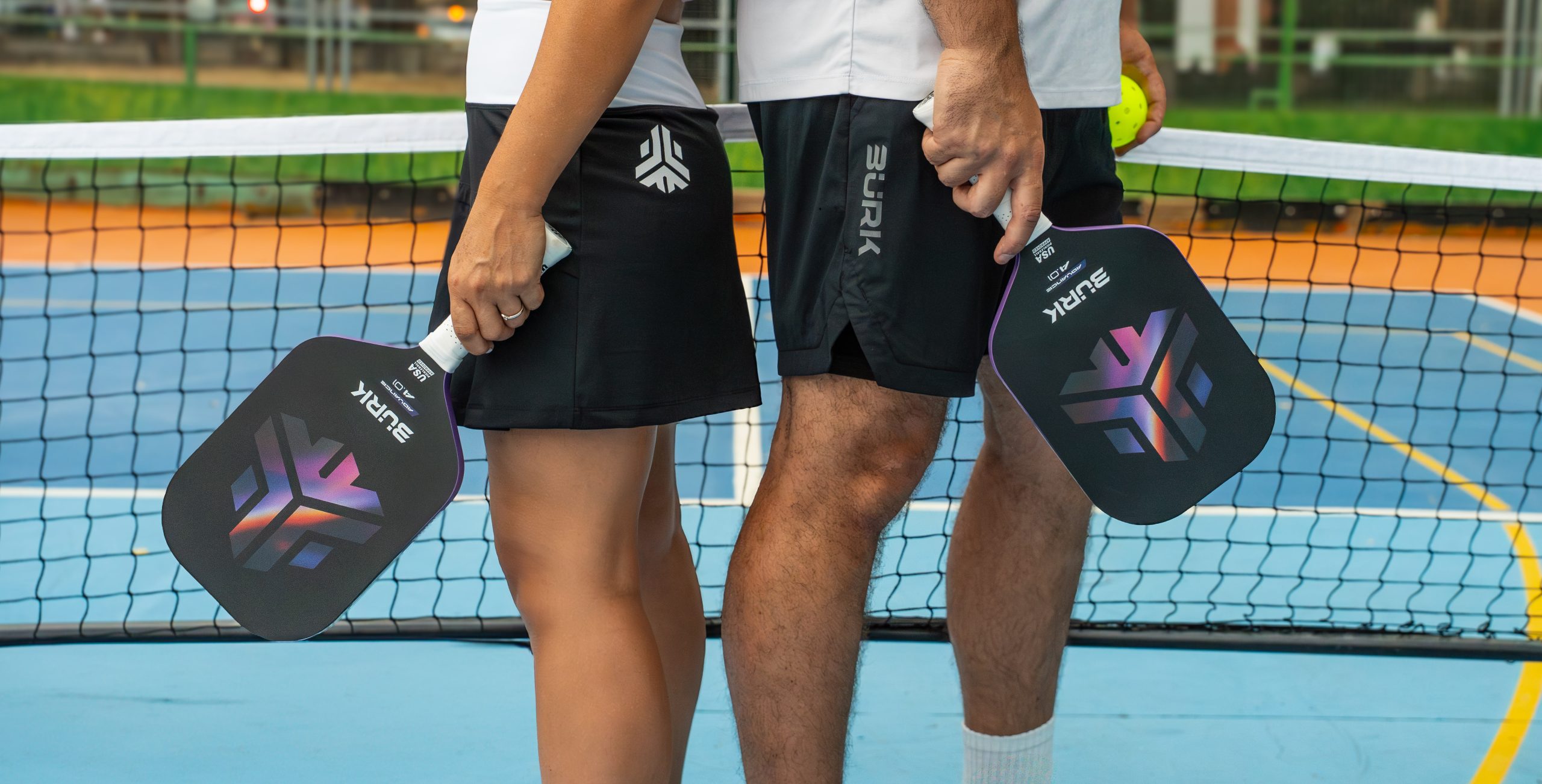
Pickleball not only improves your cardiovascular health and mood, but it’s also a functional muscle workout for your legs without you even realizing it. It’s a great option for those who want to strengthen their lower body in a fun, safe way without the monotony of a gym routine, so the next time you step onto the court and pick up your BÜRK pickleball paddle, remember: in addition to having fun, you’re working those legs hard!

 No products in the cart.